Hardware Platform
Zynq UltraScale+ 1EG — A Generational Leap
The move from the Zynq 7000 series to Zynq UltraScale+ is not an incremental upgrade — it is a generational leap that transforms the banknote counter from a simple mechanical device into an intelligent, connected, display-capable system.
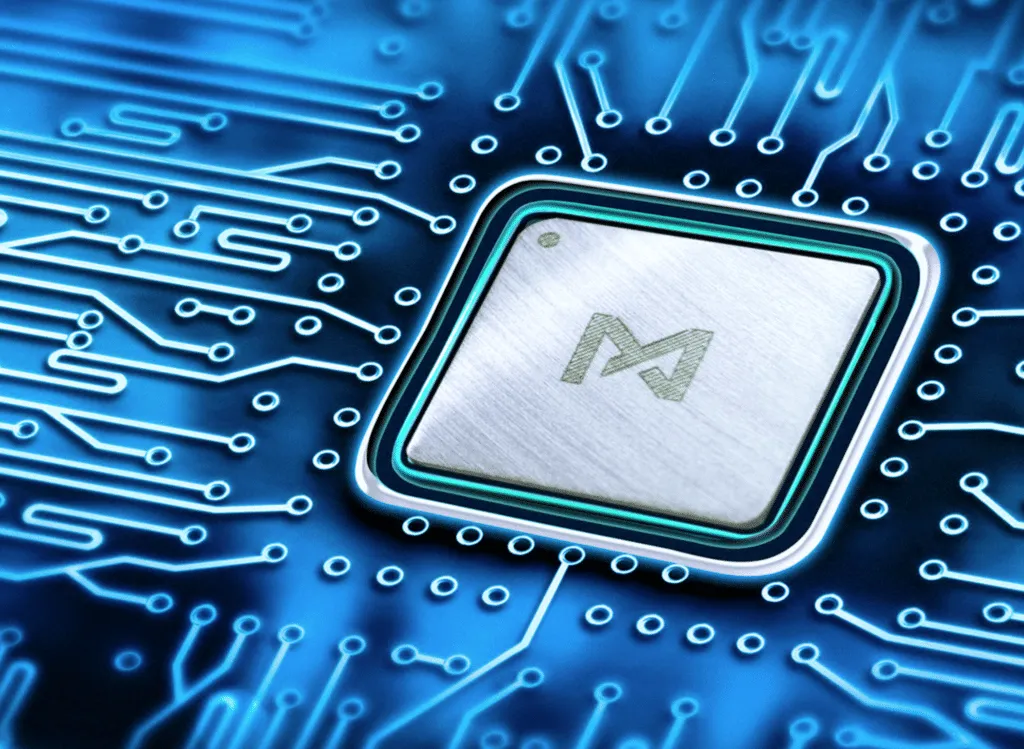
The Mythic M1076 NPU connects to the Zynq UltraScale+ 1EG via PCIe, forming the AI processing core of the new platform.
SoC Comparison: Zynq 7010/7020 vs Zynq UltraScale+ 1EG
| Specification | Zynq 7010 / 7020 (Old) | Zynq UltraScale+ 1EG (New) |
|---|---|---|
| CPU Core | Dual-core ARM Cortex-A9 | Quad-core ARM Cortex-A53 + Dual-core Cortex-R5F |
| CPU Clock | 667 / 866 MHz | Up to 1.5 GHz |
| Architecture | 32-bit ARMv7 | 64-bit ARMv8 |
| GPU | None | Mali-400 MP2 |
| Display Output | None | DisplayPort 1.2a |
| PCIe | None | PCIe Gen2 x4 |
| Memory | DDR3 / DDR3L | DDR4 |
| FPGA Fabric | 28K / 85K Logic Cells | 23K Logic Cells + UltraRAM |
Key Advantages
1. Dramatically Faster CPU
The Cortex-A53 at 1.5 GHz is roughly 4–5× faster than the Cortex-A9 at 667 MHz — not just from higher clock speed, but from a fundamentally more efficient 64-bit architecture. The additional dual-core Cortex-R5F handles dedicated real-time tasks such as motor control and sensor timing, freeing the main CPU entirely for image processing and system management.
2. Mali-400 MP2 GPU
The previous SoC had no GPU at all. The Mali-400 MP2 enables:
- External display output via DisplayPort — the machine can now drive a monitor or touchscreen directly
- Hardware-accelerated 2D/3D graphics rendering for rich user interfaces
- Potential for GPU-assisted pre-processing of images before NPU inference
3. External Display Support
With a display output, entirely new possibilities open up:
- Real-time banknote image viewer — operators can see what the machine "sees" under each spectral mode (IR, UV, visible)
- Detailed rejection reason display — show exactly why a note was rejected (tape location, counterfeit area, fitness defect) with visual highlighting
- Diagnostic and training interface — technicians can monitor machine performance, view statistics, and troubleshoot directly on-screen
- Customer-facing display — show counting progress, denomination breakdown, or branding in retail/casino environments
4. PCIe Interface
Without PCIe on the previous SoC, connecting an external AI accelerator was not possible. PCIe Gen2 x4 provides the bandwidth needed to stream full-resolution CIS images to the M1076 NPU in real time. This single interface is what makes the entire NPU architecture possible.
5. DDR4 Memory
Higher bandwidth and capacity than DDR3, essential for buffering high-resolution multi-spectral images before and after NPU processing.