AI Demo: Scotch Tape Detection
See how our AI detects scotch tape on banknotes — and where it looks
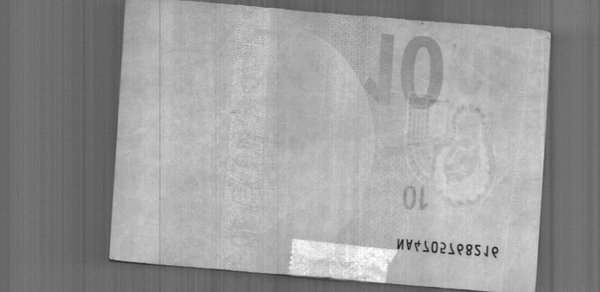
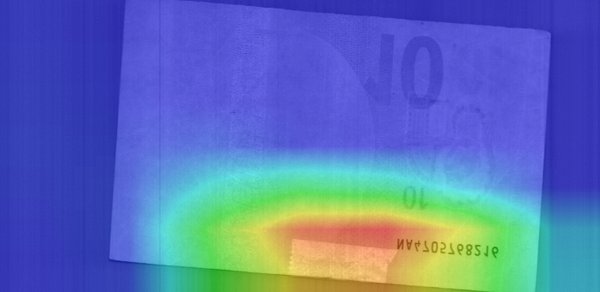
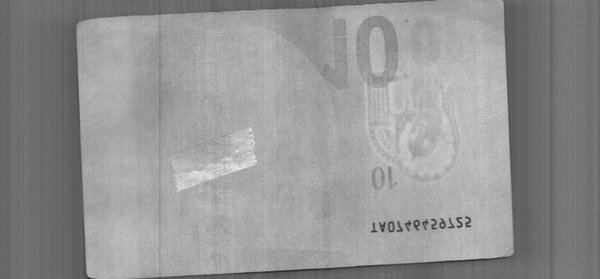
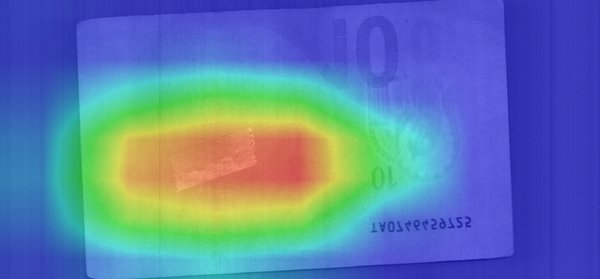
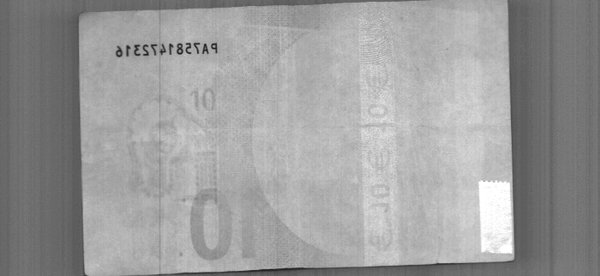
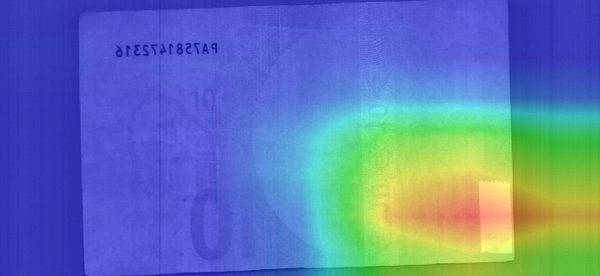
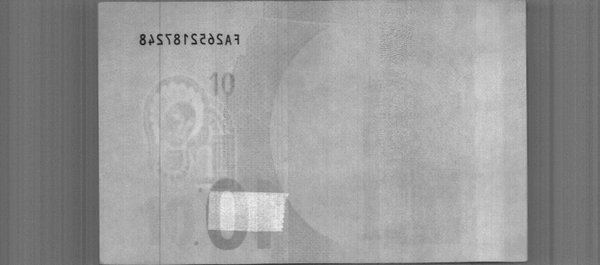
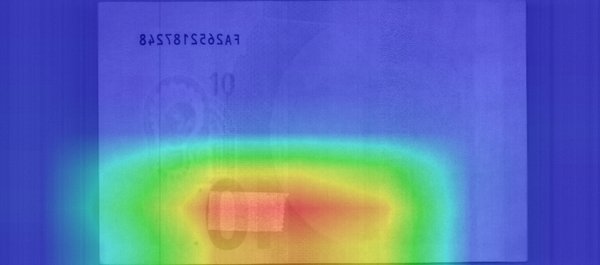
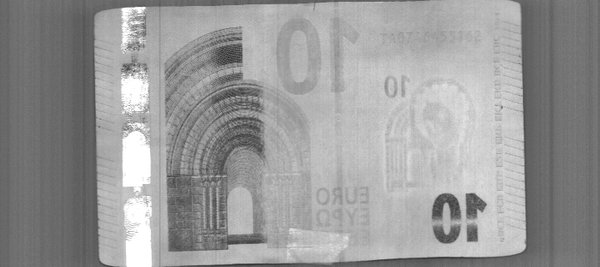
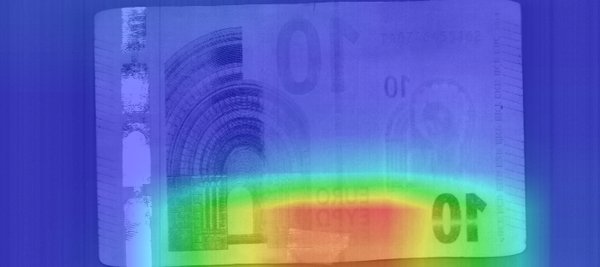
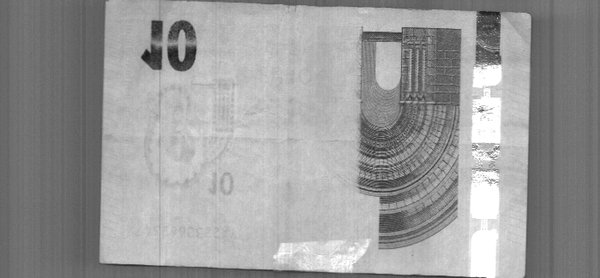
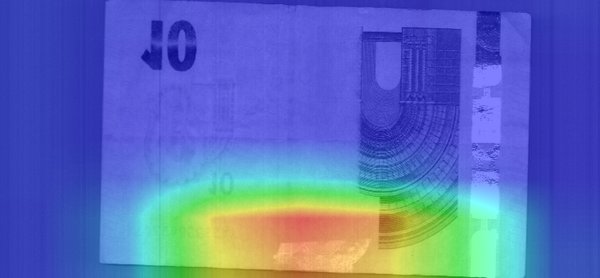
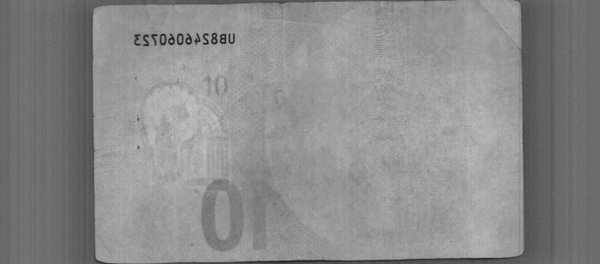
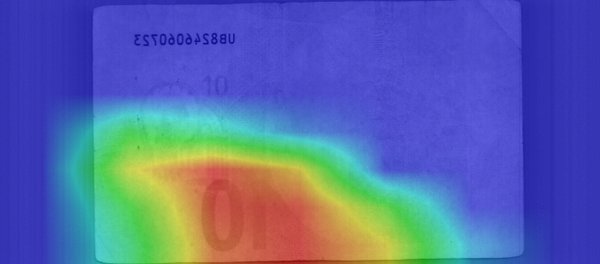
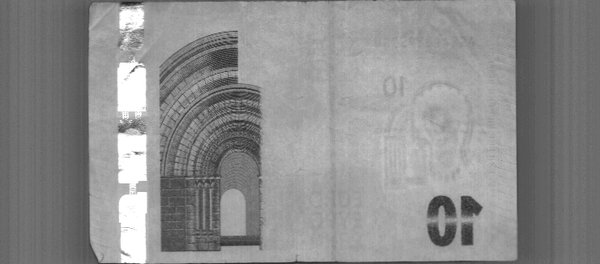
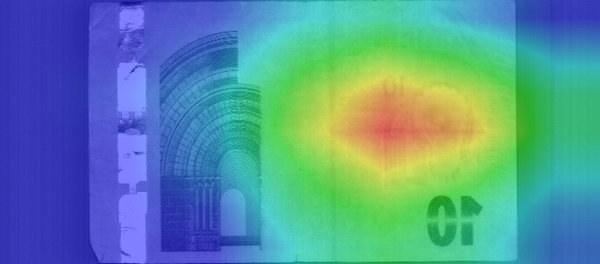
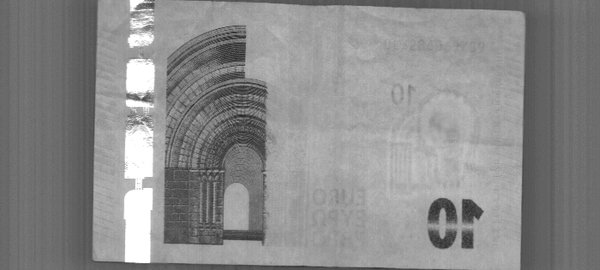
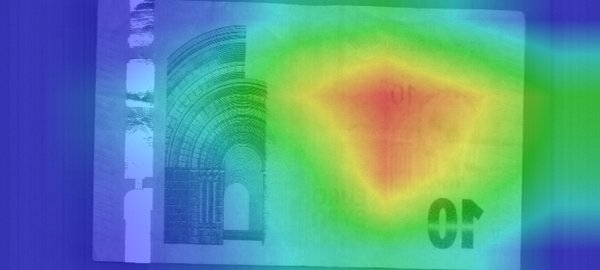
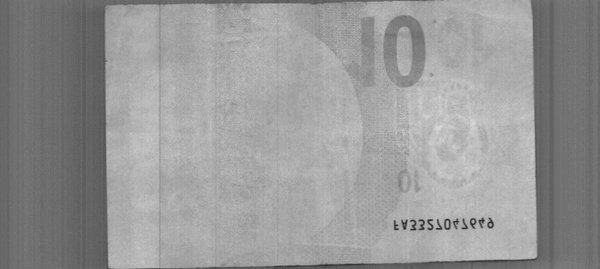
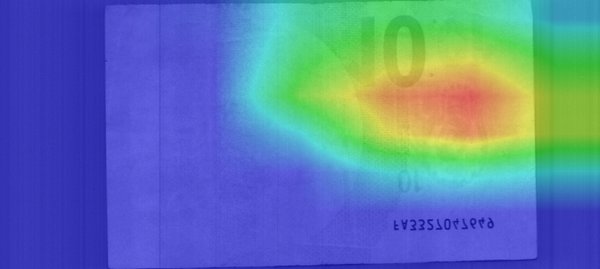
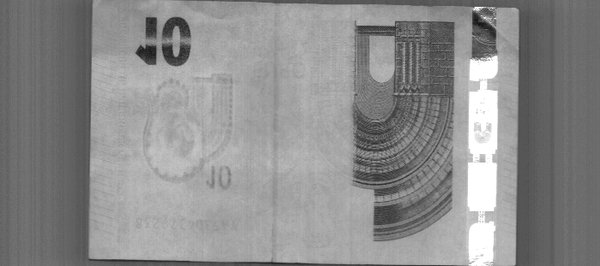
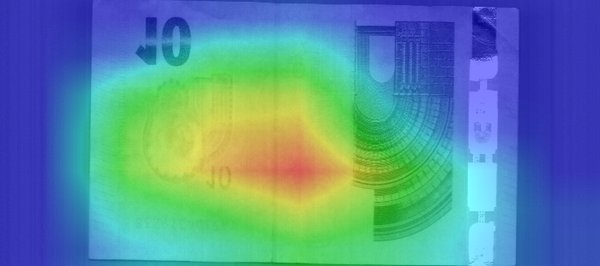
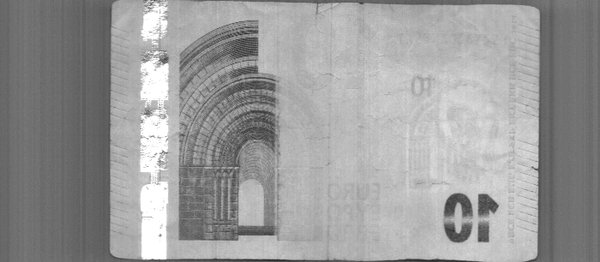
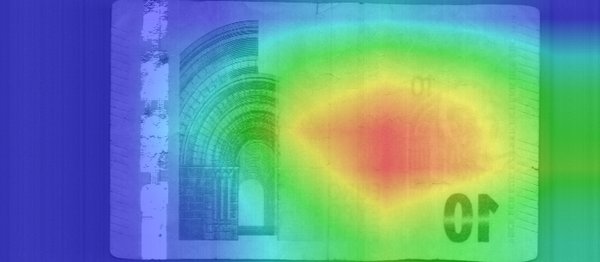
Below are real banknote images captured by an early prototype of our new CIS sensor. The AI model (ResNet50 running on our Analog NPU) classifies each image as Tape Detected or No Tape — and the Grad-CAM heatmap shows exactly which regions the AI focused on to make its decision.
Original Image
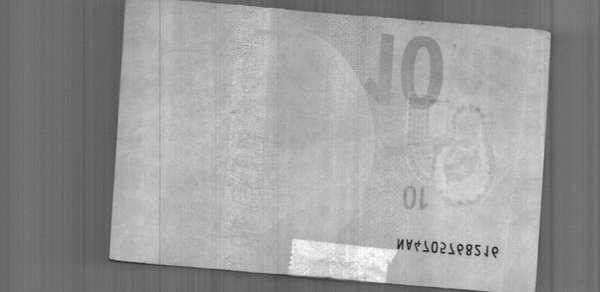
IR scan of a banknote from prototype CIS
AI Heatmap (Grad-CAM)
Red/Yellow = high attention, Blue = low attention
Hover / Tap to Compare
Move your cursor to reveal the heatmap
Tape Detected
These banknotes have scotch tape applied. Notice how the AI highlights the taped regions in warm colors (red/yellow).
No Tape (Clean)
These banknotes are clean — no tape. The AI's attention is spread more evenly across the surface, confirming no localized anomaly.
Deep Dive: How the AI Focuses
A deep neural network processes images through multiple layers. Early layers detect basic features (edges, textures), while deeper layers recognize high-level patterns. Watch how the AI's attention progressively narrows from broad scanning to pinpointing the exact tape location.
Original (IR Scan)
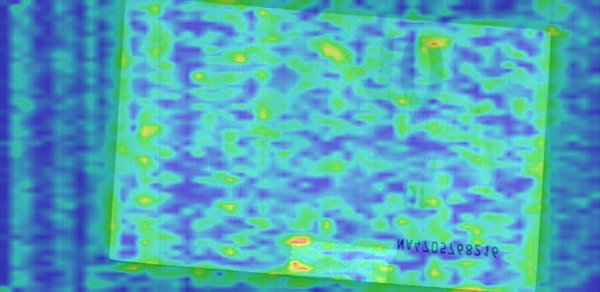
Edges & textures
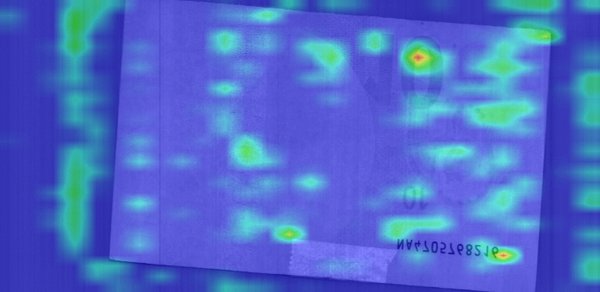
Patterns & shapes
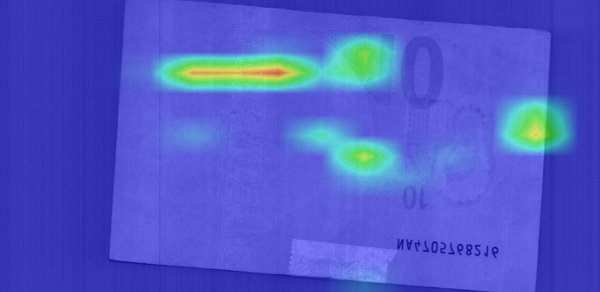
Object parts
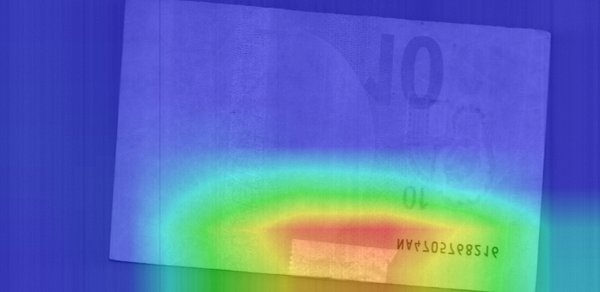
Final decision
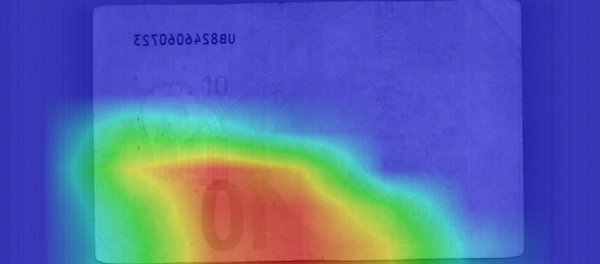
Notice how the attention concentrates from the entire surface to the exact tape location as layers deepen.
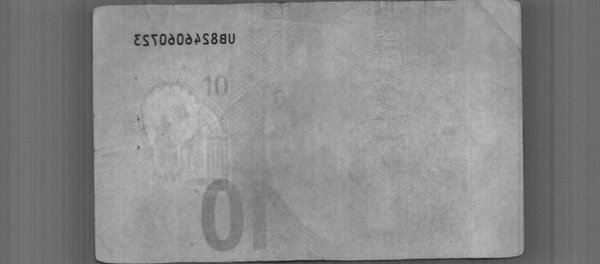
Original (IR Scan)
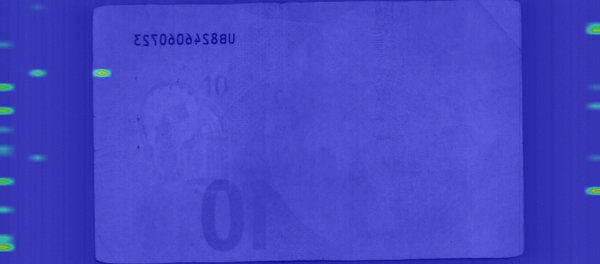
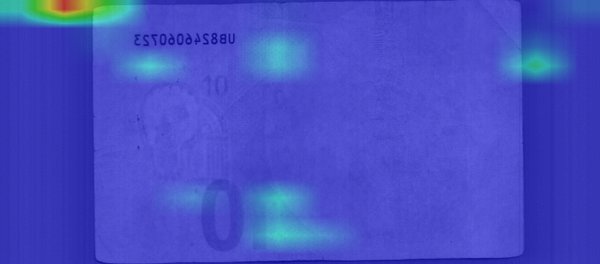
Edges & textures
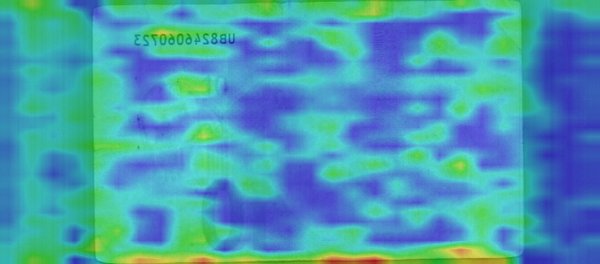
Patterns & shapes
Object parts
Final decision
With no tape present, the attention remains broadly distributed — the AI found nothing suspicious to focus on.
How It Works
Model: ResNet50, fine-tuned for binary classification (tape / no tape). Trained on real banknote images captured by an early prototype of our Advanced CIS sensor under infrared illumination.
Visualization: Grad-CAM (Gradient-weighted Class Activation Mapping) shows which image regions most influenced the AI's decision. Red/yellow = high influence, blue = low influence.
Why it matters: Traditional rule-based tape detection uses a mechanical sensor that physically touches every banknote. It's noisy, wears out, and achieves only ~65% detection rate at best. Our AI-based approach analyzes the full image at 1,000+ notes per minute with near-100% accuracy — and the mechanical sensor is completely eliminated.